Choosing the right wind rating garage door in Gulfport is an important part of protecting a home or business during severe weather. Gulfport sits along the Mississippi Gulf Coast, where hurricanes and strong winds can place heavy pressure on large doors. The correct rating is not the same for every property. It depends on the building’s location, height, exposure, door size, and local code rules.
Why Garage Door Wind Ratings Matter
A garage door is one of the largest openings in a building. A standard door may bend, leave its tracks, or fail when hit by strong wind. Once the door gives way, wind can rush inside and raise the pressure under the roof and against the walls. This extra pressure can cause much more damage to the building. A wind-rated garage door uses stronger panels, tracks, brackets, hinges, and supports to resist these forces. FEMA recommends using high-wind-rated doors in areas exposed to hurricanes and severe coastal weather.
Is There One Required Wind Speed for All of Gulfport?
There is no single wind speed rating that fits every garage door in Gulfport. Building codes use design wind speeds, but wind speed is only one part of choosing a door. Two homes in the same city may need different products because one is near open water while the other is surrounded by buildings and trees. A large double garage door may also need more support than a smaller single door.
The property address must be checked under the code used by the local building department. A garage door professional can use that information with the opening size and building details to find the needed design pressure rating. This gives the property owner a more accurate answer than choosing a door based only on a hurricane category or advertised wind speed.
Wind Speed and Design Pressure Are Different
Many people ask how many miles per hour a garage door can handle. That number can be helpful, but design pressure, shown as PSF or pounds per square foot, gives more useful information. It shows how much force the door can resist across its full surface.
Garage doors are tested for both positive and negative pressure. Positive pressure pushes the door toward the building. Negative pressure pulls it outward. A properly rated door must resist both forces. The required PSF can change based on the door’s width, height, location on the building, and exposure to open land or water. This is why two doors sold for the same wind speed may not be approved for the same opening.
Does a Hurricane-Rated Door Need Impact Protection?
A wind-rated door and an impact-rated door are not always the same product. Wind resistance helps the door stay in place under heavy pressure. Impact protection helps it resist debris carried by the wind. Some code areas may require protection against both.
Doors with windows need special attention. Standard glass may break when struck by debris, leaving an opening for wind and rain. A door used in a wind-borne debris area may need approved impact-resistant glass or another approved protection system. Product documents should clearly state what the complete door assembly has been tested to resist.
What Parts Make a Garage Door Wind-Rated?
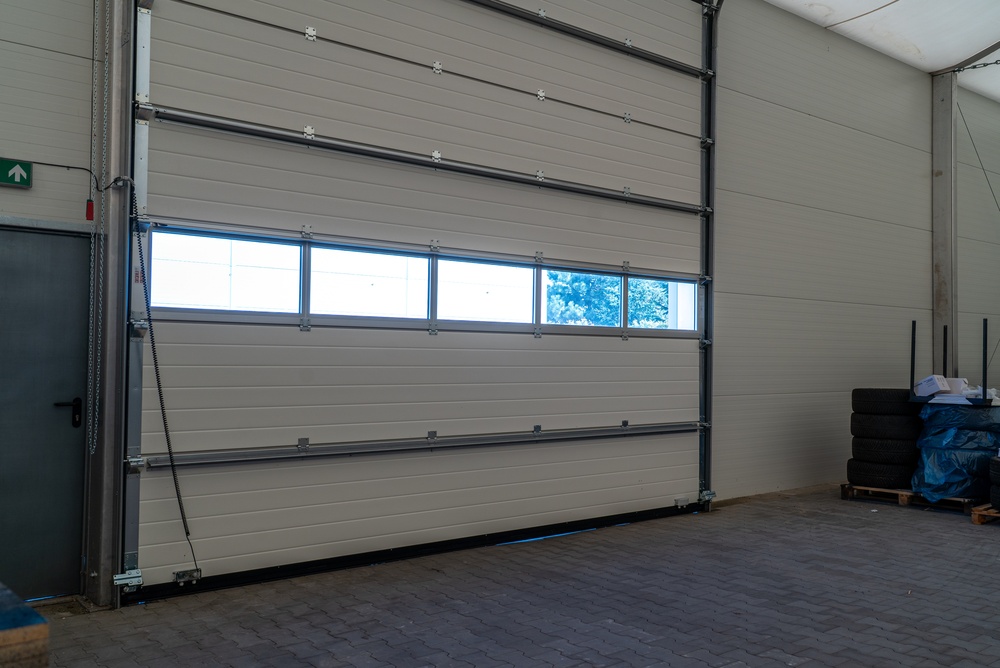
A hurricane-rated garage door is built as a complete system. Strong panels alone do not make the door wind-rated. The system may include heavier tracks, reinforced hinges, stronger rollers, extra brackets, approved fasteners, and horizontal or vertical supports. The tracks must also be attached correctly to the wall framing.
Some doors use permanent supports built into the system. Others may have braces that must be placed before a storm. Property owners should know which type they have and how it works. Every part listed by the manufacturer must be installed correctly. Changing the tracks, hardware, or supports may affect the door’s tested rating.
How to Check a Garage Door’s Wind Rating
Start by looking for a manufacturer label on the inside of the door. The label or related paperwork may list the model number, test standard, design pressure, and approval information. Do not rely only on the door’s age, thickness, or appearance. A heavy door is not always a tested wind-rated door.
A professional inspection can confirm if the label matches the installed panels and hardware. The technician can also check for rust, loose fasteners, bent tracks, missing braces, or past repairs that may have weakened the system. If the rating cannot be confirmed, the door may need added reinforcement or replacement.
Can an Existing Garage Door Be Reinforced?
Some existing doors can be strengthened with an approved garage door reinforcement system. The work may include new braces, stronger tracks, heavier hinges, and better connections to the building. This option depends on the door’s age, condition, size, and construction.
A reinforcement kit should be designed for the exact door and installed according to its instructions. Adding lumber, random metal bars, or untested hardware does not prove that the door can resist hurricane winds. An older door with rusted panels or damaged tracks may be better suited for replacement.
Choose the Right Wind-Rated Door for Your Property
The right wind rating garage door in Gulfport must match the property’s address, door opening, design pressure needs, and local building rules. A tested door with the correct tracks, supports, and fasteners can give a home or business stronger protection during Gulf Coast storms. ACE Garage Door installs and services wind-rated garage doors throughout Gulfport and the Mississippi Gulf Coast. Contact ACE Garage Door today to have your opening checked and find the right wind-rated system for your property.